

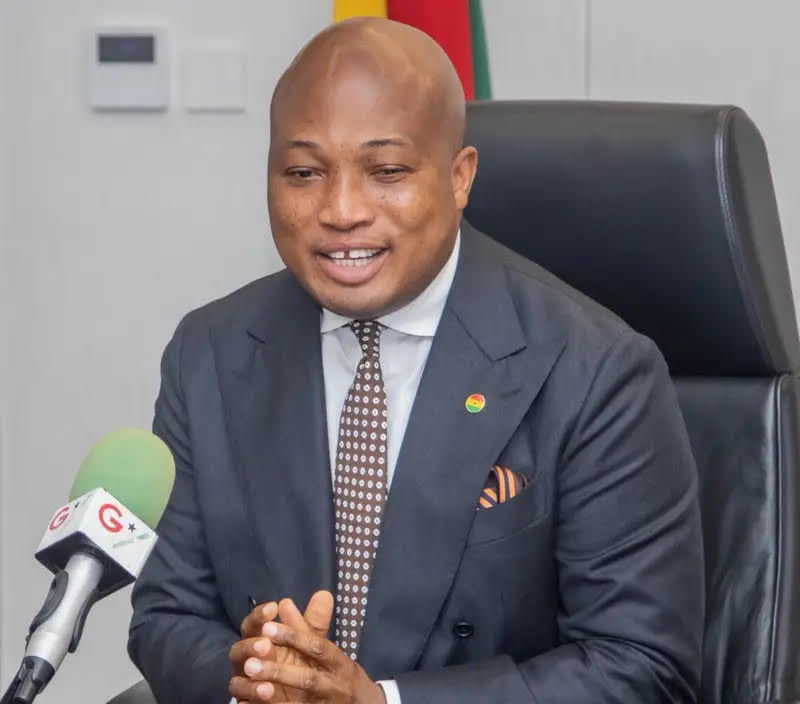
Renowned Ghanaian scholar and Professor of English at Stanford University, Ato Quayson, has extolled the compassionate nature of the Minister for Foreign Affairs, Samuel Okudzeto Ablakwa, describing him as a Foreign Minister unlike any Ghana has had in decades.
Prof. Quayson, who has also taught at the universities of Cambridge, Toronto and New York University (NYU), said months of observing the Foreign Minister under the current Mahama administration had led him to “the unshakeable conclusion that much of what he does is driven by deep human compassion above all else.”
The professor pointed to a series of interventions by the minister since he assumed office from the rescue of Ghanaians caught up in xenophobic attacks in South Africa, to his strong response to the recent shooting of 15-year-old Javits Frimpong in the Bronx, to his condemnation of the physical abuse meted out to Stephanie Nkrumah by her employer in Iraq noting that each response illustrated “the same motif.”
According to Prof. Quayson, the minister’s compassion is matched by an equally strong indignation at injustice, a trait he said Mr Ablakwa carried from his days as a Member of Parliament in opposition.
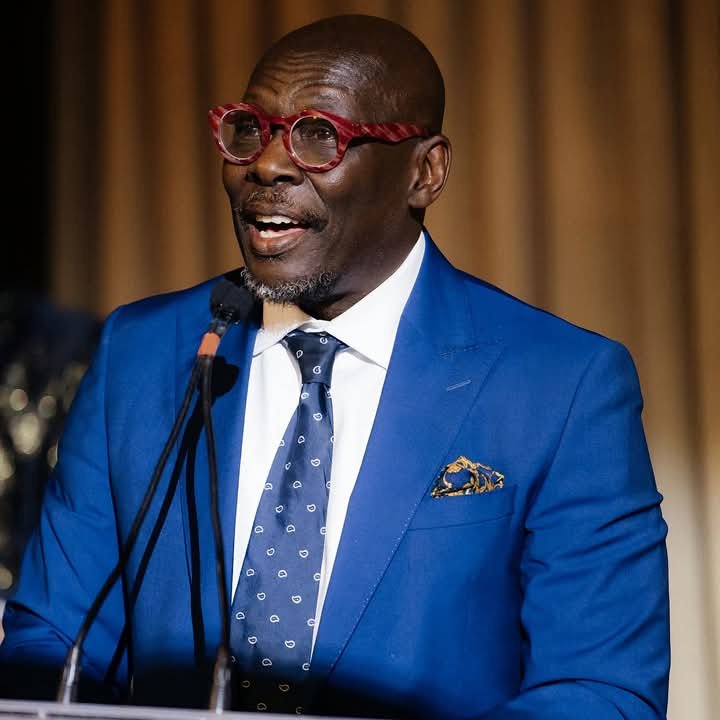
“I grew up in Ghana and have paid close attention to all its state functionaries for at least the past 35 years, and I can wholeheartedly say that the country has never had a Foreign Minister with his level of compassion,” he wrote. “He is one of a kind.”
Prof. Quayson acknowledged that the minister had his fair share of critics, but insisted that this did not diminish his record.
“His detractors are many and of course it is right that he be held rigorously accountable for all his actions,” he said. “But at the bottom of everything we also have to recognise that this is a dedicated public servant and an extraordinary individual. There is much to learn from watching him.”
He clarified that his admiration was based purely on observation rather than any personal relationship, having met the minister only once at a panel discussion on Xenophobia and Afrophobia at the recent African Humanities Association conference.
“He was even more impressive in person than in the many news clips I have watched of him,” the professor added.
Prof. Quayson said he shared his impressions simply as reflections on a public servant at work. “Nothing more,” he concluded.