

By Leo Nelson
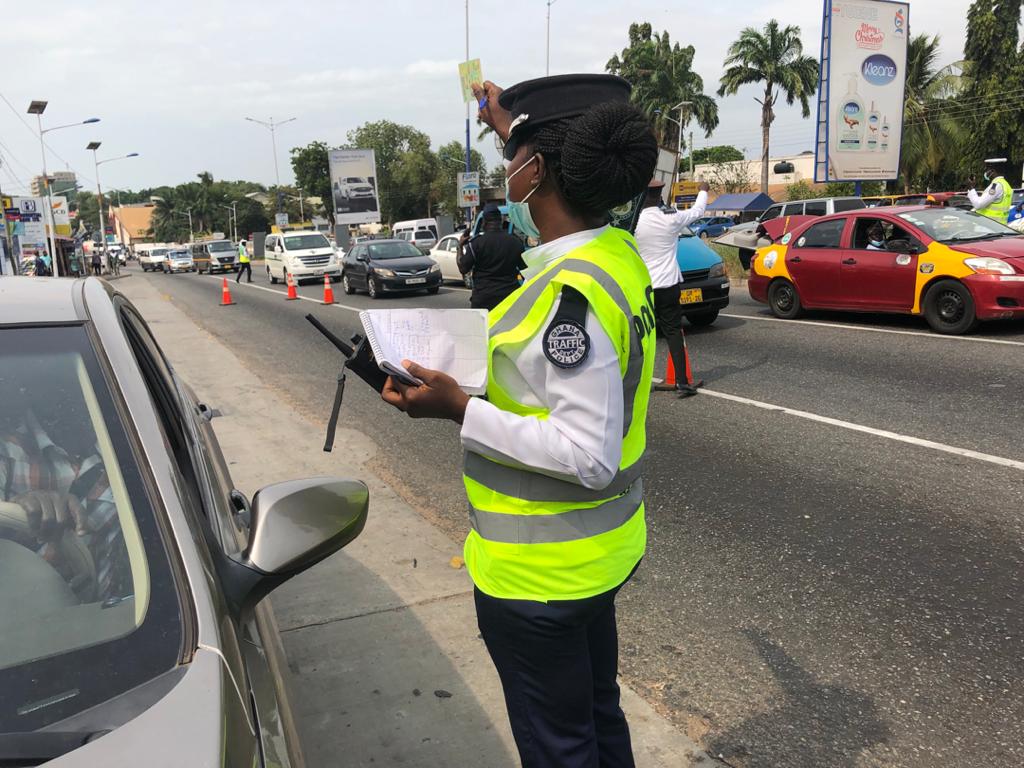
The increasing number of Police check points along the busy Accra-Aflao highway is raising concerns among residents, commercial drivers and commuters who ply the route.
They have described the situation as a major nuisance that is affecting movement, business activities and transportation costs.
The Accra-Aflao highway, which serves as a major international corridor linking Ghana to neighbouring Togo and other West African countries, is one of the busiest roads in the country.
However, many road users say the numerous police barriers mounted at different sections of the highway are causing unnecessary delays and frustration.
Drivers operating on the route complained that vehicles are often stopped at several points within short distances for routine inspections, despite having valid documents and complying with road safety regulations.
Some commercial drivers who poured out their frustrations to The New Republic complained that the constant stops have contributed to longer travel times between Accra and Aflao, particularly during peak hours and festive seasons when traffic volume increases significantly.
According to them, a journey that ordinarily should take about three to four hours sometimes extends beyond five hours due to repeated security checks.
Fotor Amenyo, a commercial driver at the Aflao lorry station noted that while security checks are important for public safety, the excessive number of checkpoints is becoming unbearable.
“We understand the need for security on our roads, but the checkpoints are too many. At almost every town you meet another patrol, and it slows everybody down,” he lamented.
Passengers travelling on the route also expressed dissatisfaction, saying the frequent stops create discomfort and delay urgent movements.
Maame Serwa, a trader travelling from Accra to Aflao stated that transport fares continue to rise partly because drivers spend more fuel and time on the road due to the interruptions.
Cross-border traders who depend on the highway for daily business activities also appealed to the authorities to review the situation to facilitate smoother transportation and trade within the sub-region.
Some motorists further alleged that certain checkpoints have become avenues for harassment and intimidation, although they acknowledged that many police officers conduct themselves professionally.
Godson Bill Ocloo, a security analyst, however, argued that checkpoints remain an important tool in combating armed robbery, human trafficking, smuggling and other transnational crimes along the international highway.
He explained that the corridor is strategically important and requires continuous monitoring to ensure public safety and national security.
A police officer who spoke on condition of anonymity defended the operations, saying checkpoints help security agencies to track criminal activities and protect travellers.
He noted that the police administration periodically reviews security arrangements and would continue to balance public convenience with safety concerns.
Meanwhile, some commuters are calling on the government and the leadership of the Ghana Police Service to streamline checkpoint operations by reducing their numbers and adopting more technology-driven surveillance methods to ease congestion on the highway.
They believe such measures would improve travelling conditions, boost economic activities and restore public confidence among road users along the critical Accra-Aflao corridor.