

Ho MTTD commander accused of Centralizing extortion from motorists, with weekly quotas and a mobile-money account for pooling proceeds
TNR Files
Months of investigation by The New Republic have uncovered what sources describe as an institutionalised bribe-collection system within the Motor Traffic and Transport Department (MTTD) of the Volta Regional Police Command. The scheme, which operates like a formal tolling operation, requires officers on road duties to collect bribes and pay them into a central “welfare” account, from which sums are shared according to rank.
The architect of the system is identified as Chief Superintendent Benedicta Akpene Ansah, the MTTD Units Commander in Ho, the regional capital. She has declined to respond to written questions or telephone calls since The New Republic first confronted her with evidence on 8 July.
According to multiple police sources, the scheme assigns weekly bribe targets to different duty points. The Sogakope and Juapong stretches, considered the most lucrative, are expected to yield between GHC3,500 and GHC4,000 per week. Other posts have lower quotas of about GHC400 weekly.
The collection teams, operating under the nickname “Wobedibi” (“you will eat some”), range from five to 12 officers. After each week’s harvest, the proceeds are paid into a Mobile Money account (0540751376), described internally as the welfare number. The PIN is held by regional command.
Disbursement follows a rank-based formula: senior officers receive larger shares, while junior officers take smaller portions. A residual balance is kept in the account to fund welfare activities.
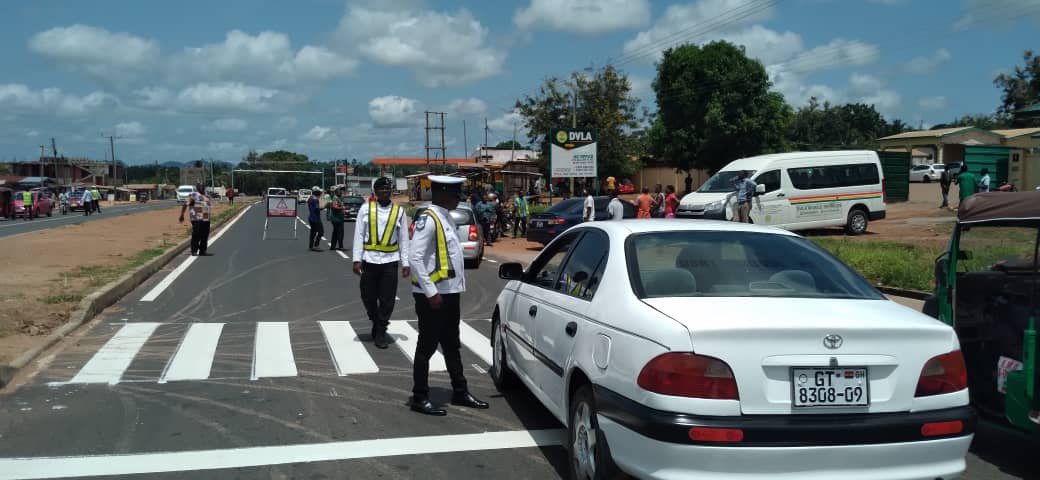
Sources say the system has encouraged the proliferation of checkpoints, with as many as 18 roadblocks between Accra and Aflao. However, these checkpoints are conspicuously removed when the President or senior government officials travel through the region. Officers who refuse to participate are blacklisted and excluded from rosters for the most profitable posts. The commander, C/Supt Ansah, is said to have taken personal charge of drafting duty schedules, enabling her to select favoured collectors.
The scheme’s focus on revenue has reportedly weakened enforcement: drivers willing to pay large bribes often pass through with minimal scrutiny. The New Republic sent a formal questionnaire to C/Supt Ansah on 8 July and has since made repeated phone and text contacts, all unanswered. Further details of the operation will be published in coming editions, the newspaper said.