

By Prince Ahenkorah
In a legal offensive that strikes at the foundational power structures of Ghana’s political establishment, a formidable coalition of veteran figures has petitioned the Supreme Court to dismantle the delegate-based electoral systems used by the country’s major parties.
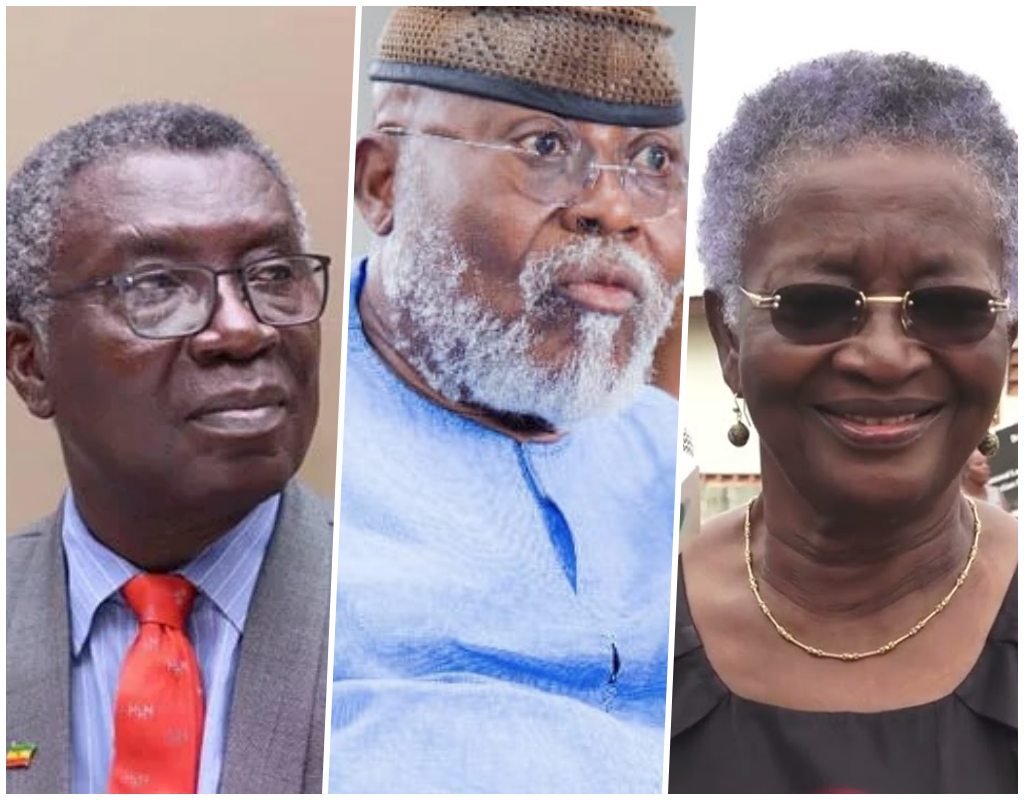
The plaintiffs—former Environment Minister Prof. Kwabena Frimpong-Boateng, seasoned politician Dr. Nyaho Nyaho-Tamakloe, and former Education Minister Dr. Christine Amoako-Nuamah—are challenging the constitutional legitimacy of the internal electoral mechanisms of the New Patriotic Party (NPP), National Democratic Congress (NDC), and Convention People’s Party (CPP). Their suit targets the very architecture that enables party elites to control candidate selection and leadership succession.
The core argument of the suit is a radical redefinition of a political party’s nature. The plaintiffs contend that parties are not “private clubs” but “constitutionally recognized institutions” through which state power is accessed and exercised. Consequently, they argue, the internal process of selecting parliamentary and presidential candidates is not a private affair but a matter of “core” public interest, governed by the constitutional mandate for democratic operation under Article 55(5).
By restricting the vote for flagbearers and parliamentary candidates to a closed college of executives, MPs, and appointed delegates, the suit alleges the NPP, NDC, and CPP have effectively “disenfranchised” their rank-and-file members. This, the plaintiffs assert, violates a suite of constitutional rights, including political equality (Article 17), the right to vote (Article 42), and the state’s duty to promote democracy (Article 35).
The legal filing presents a potent piece of evidence: the NDC’s own brief experiment with a universal suffrage system in 2015, which was subsequently abandoned. This reversal, the plaintiffs argue, demonstrates both the feasibility and the deliberate rejection of broader democracy by party hierarchies, creating an urgent need for judicial intervention to settle the constitutional standard.
The suit also implicates two key state institutions. The Electoral Commission (EC) is accused of a dereliction of duty for failing to enforce democratic norms within parties as required by the Political Parties Act. The Attorney-General, as the state’s principal legal officer, is joined to defend the constitutional order the plaintiffs claim is being undermined.
The plaintiffs are seeking nothing less than a judicial revolution in Ghana’s political mechanics. Their demands from the Supreme Court include:
1. A declaration that the current delegate systems are unconstitutional.
2. An order striking down the relevant sections of the parties’ own constitutions.
3. A directive for the parties to adopt procedures guaranteeing “equal, direct, and meaningful participation” of all members.
4. A mandatory order compelling the Electoral Commission to actively supervise and enforce democratic compliance in all internal party elections.
This lawsuit transcends a simple technicality; it is a proxy war for control and ideological direction. Figures like Frimpong-Boateng, recently at odds with the NPP leadership, and Nyaho-Tamakloe, a longstanding internal critic, are leveraging the judiciary to break the grip of current party establishments. Their target is the delegate system—the primary instrument used by sitting presidents, party chairs, and regional barons to anoint successors and sideline challengers.
A victory for the plaintiffs would trigger the most significant internal power redistribution in Ghanaian politics since the return to multi-party democracy. It would shift influence from a few hundred kingmakers to millions of grassroots members, potentially unleashing unpredictable populist forces and altering the calculus for every future presidential primary.
The case presents the Supreme Court with a deeply political constitutional quandary: to defend a rigid interpretation of party autonomy or to mandate a radical democratization from within. The ruling will either entrench the power of the existing party machinery or dynamite its foundations, reshaping Ghana’s political landscape for a generation.