

By Nelson Ayivor
Amid the ongoing escalation of hostilities in the Middle East, Ghana’s Foreign Ministry has announced the successful evacuation of all Ghanaian embassy staff from Iran.
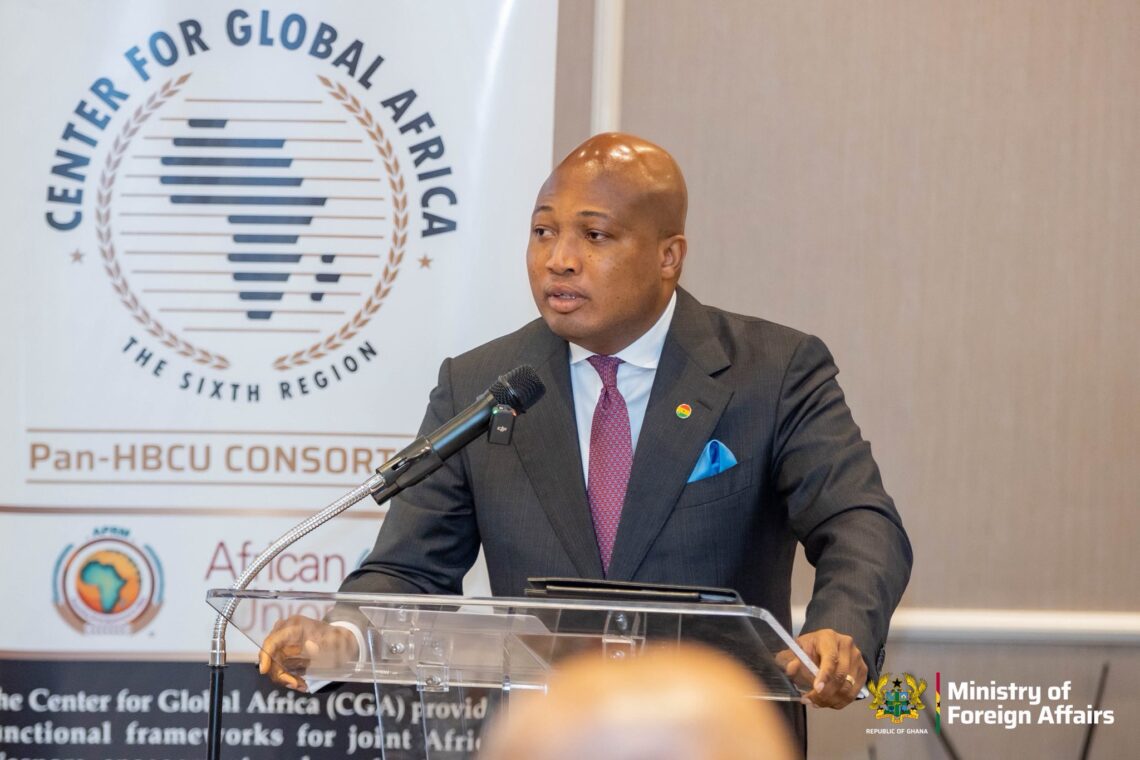
In a brief but emphatic statement, Ghana’s Foreign minister, Samuel Okudzeto Ablakwa confirmed that all diplomats were safe and in good spirits after the operation, describing their protection as a national priority.
According to the minister, Ghana’s embassy in Iran has now been closed indefinitely. The decision reflects a cautious assessment of the deteriorating security environment and the government’s resolve to place the welfare of its citizens above all other considerations.
He stressed that in uncertain and volatile times, the safety of Ghanaians at home and abroad remains paramount. The evacuation marks one of the most significant diplomatic security actions taken by Ghana in recent years, underscoring the seriousness with which authorities view the current situation in the Middle East.
While confirming the closure of the mission in Iran, Minister Ablakwa also provided an update on Ghana’s diplomatic presence in Israel.
“Operations at the Ghanaian embassy in Tel Aviv have been scaled down to a bare minimum as a precautionary measure. Despite the reduced footprint, the mission remains operational and in constant contact with Ghanaians residing in the country.”
Officials continue to monitor developments closely and maintain communication channels to provide assistance should the security situation deteriorate further.
The ministry has emphasised that no decision to fully shut the Tel Aviv mission has been taken, but adjustments remain under review based on evolving risks.
Beyond immediate consular actions, Ghana has adopted a clear diplomatic stance on the unfolding crisis. The Ministry of Foreign Affairs has issued a formal statement expressing serious concern over the escalation of hostilities involving the United States, Israel, and Iran.
Ghana has urged all parties to step back from military confrontation and recommit to dialogue as the only sustainable path to peace. The government has reiterated its long-standing commitment to neutrality, non-alignment, and multilateralism.
Ghana’s position, according to the ministry, is rooted in a pacifist approach that respects the principles of the United Nations Charter and international law. Officials argue that further escalation risks destabilising not only the region but the global system, with disproportionate consequences for vulnerable economies.
As part of its broader protective measures, the government has issued strong travel advisories cautioning Ghanaian nationals against non essential travel to the Middle East. Particular concern has been raised about airspace closures and security risks in countries such as Bahrain, Kuwait, Qatar, and the United Arab Emirates.
Ghanaians already in these countries have been advised to remain vigilant, follow local authority guidance, and maintain regular contact with Ghanaian diplomatic missions.
In some locations, citizens have been urged to seek shelter as a precautionary measure should tensions escalate further. The emergency advisory framework forms part of a wider plan activated to track and support Ghanaians across the Gulf region during the crisis.
The diplomatic moves come against the backdrop of mounting economic anxieties linked to the conflict.
Economic experts have warned that any disruption to shipping routes, particularly the Strait of Hormuz, could trigger severe oil supply shocks.
The Strait is a critical artery through which roughly twenty percent of the world’s oil passes. Such disruptions could drive global crude prices higher, placing pressure on oil-importing countries like Ghana.
Analysts caution that sustained price increases would strain public finances, raise transportation and production costs, and potentially weaken the Ghanaian cedi.
In response, the government has activated energy security monitoring mechanisms to assess risks and prepare mitigation strategies.
Officials say these measures aim to reduce the impact of external shocks on domestic fuel prices and broader economic stability.
The evacuation of diplomats from Iran and the scaling down of operations in Israel signal a proactive approach by Ghana in navigating an increasingly complex geopolitical environment.
Authorities insist that preparedness, clear communication, and swift action are essential in protecting citizens during periods of international instability.
For the Foreign Affairs Ministry, the current crisis reinforces the importance of diplomatic flexibility and crisis management capacity.
By prioritising citizen safety while maintaining a principled diplomatic voice calling for peace, Ghana seeks to balance its national responsibilities with its broader role in international affairs.
As tensions in the Middle East persist, the government has pledged to continue reviewing the situation and adjusting its response as necessary.
For now, officials say vigilance remains high, guided by a commitment to safeguard Ghanaians wherever they may be.