

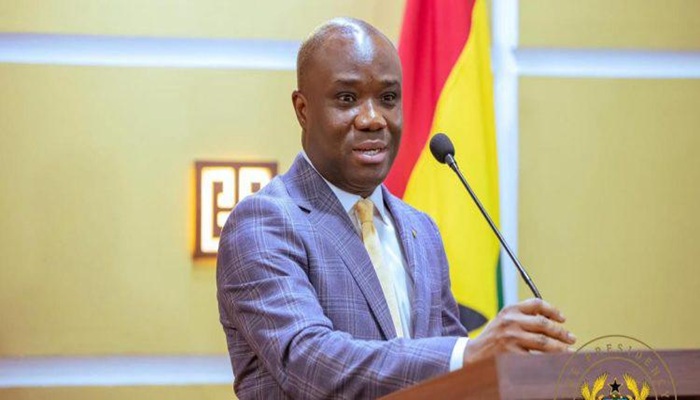
and in full force’ as critics question pace of prosecutions
By Leo Nelson
The Mahama administration has pushed back against mounting criticism that its flagship anti-corruption initiative has run out of steam, insisting that Operation Recover All Loot (ORAL) remains fully operational and is making headway through proper legal channels.
Presidential Spokesperson Felix Kwakye Ofosu has dismissed claims of failure as ‘political propaganda’ designed to undermine the government’s efforts.
Kwakye Ofosu acknowledged growing public frustration over the speed of prosecutions but blamed long-standing judicial delays rather than government inaction. ‘ORAL is not dead. It is active and in full force.
What we are doing is following the rule of law and allowing the institutions responsible for investigations and prosecutions to carry out their work,’ he said.
The defence comes as policy think-tank IMANI Centre for Policy and Education intensifies pressure on the government to name and prosecute private sector actors complicit in state looting.
The watchdog’s latest brief warned that optimism in ORAL ‘is fading, if it has not faded already’ due to limited convictions. According to Kwakye Ofosu, the ORAL committee, established on 18 December during the transition period, received over 2,000 allegations.
After careful sifting, approximately 280 cases were deemed to have sufficient basis for further investigation and have been forwarded to state investigative agencies including the Economic and Organised Crime Office (EOCO), National Intelligence Bureau (NIB), and Criminal Investigations Department (CID) .
He revealed that the NIB alone has reviewed more than 27 cases and compiled investigative dockets for submission to Attorney General Dominic Akuritinga Ayine. Among those questioned is former Health Minister Kwaku Agyeman Manu over the Sputnik V vaccine procurement during the COVID-19 pandemic.
The spokesperson pointed to several cases already before the courts, including the National Service Authority (NSA) scandal involving former deputy executive director Gifty Oware Mensah, where initial estimates of 600 million Ghana cedis in irregularities have ballooned to as much as 2 billion cedis according to Audit Service findings.
Legal action has also commenced regarding the proposed Accra SkyTrain project, with former Ghana Infrastructure Investment Fund (GIIF) chief executive Solomon Asamoah and former board chair Ameyaw Ekumfi facing proceedings.
Investigations continue into the Boankra Inland Port, National Lottery Authority operations, Pwalugu multipurpose dam, and free public Wi-Fi implementation.
Kwakye Ofosu cautioned that recovery expectations must be realistic, noting that in cases such as the Bank of Ghana’s new 400 million dollar headquarters, the completed project itself constitutes a state asset.
‘If you hold people responsible, you are unlikely to recover the entire amount because the money may have been squandered or used in ways that cannot be reversed,’ he explained.
The government is simultaneously pursuing judicial reforms, with Cabinet approving a bill to reintroduce specialised tribunals to handle corruption and illegal mining cases more expeditiously. The legislation is expected to be presented to Parliament shortly.
For President John Dramani Mahama, who campaigned aggressively on anti-corruption, the tension between due process and public expectations remains acute. As one Accra-based analyst noted,
‘The government cannot have it both ways – either ORAL is working within the system, which takes time, or it cuts corners and undermines the very rule of law it claims to protect.’ The coming months will test whether the administration can translate investigations into convictions before public patience runs out.