

By Leo Nelson
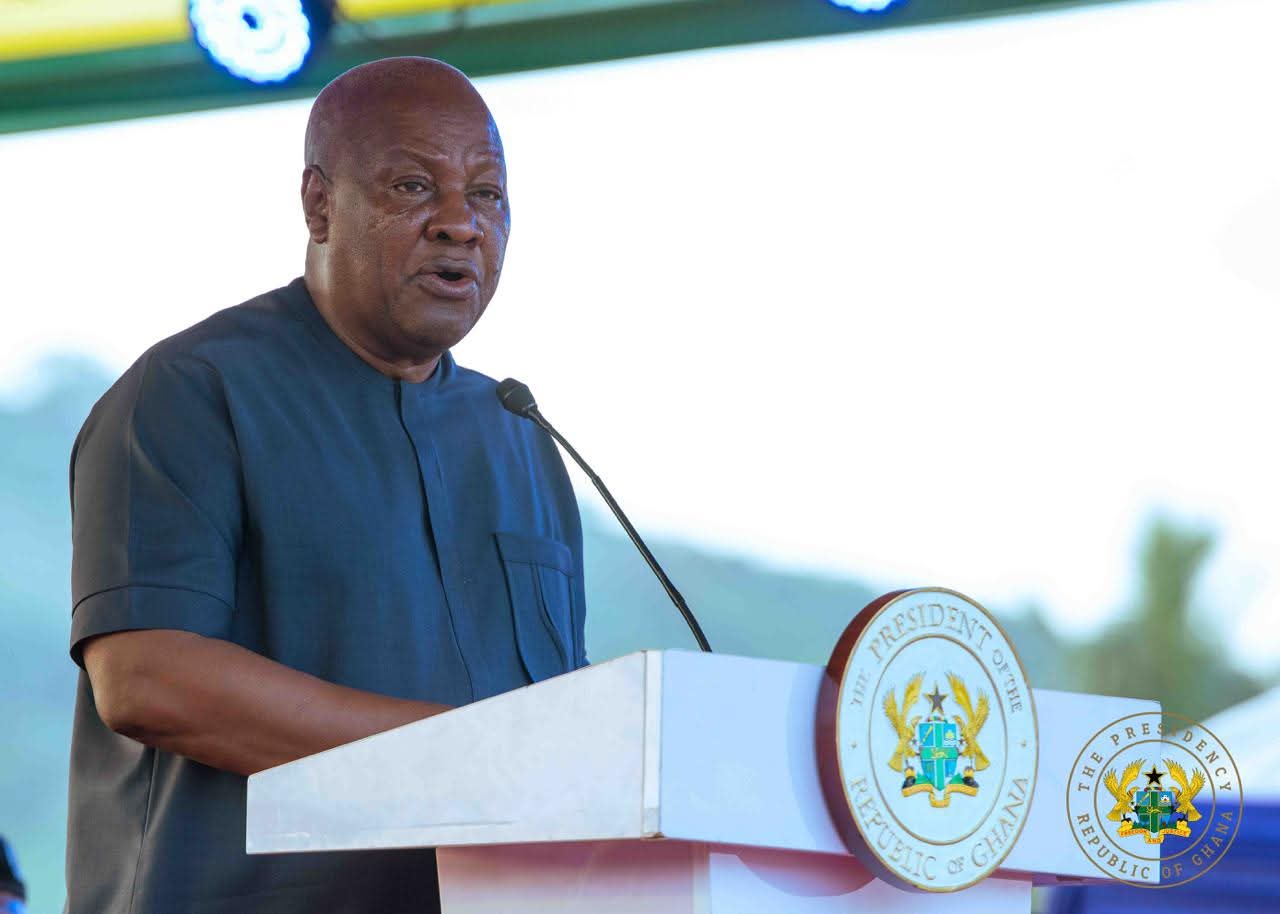
Ghana plans to launch a new economic policy that will channel annual investment equivalent to 1% of gross domestic product (GDP) into selected high-growth sectors to boost jobs and reshape its development strategy, President John Dramani Mahama said on Friday.
Addressing workers at the 2026 May Day celebrations at Jackson Park in Koforidua, Mahama said Finance Minister Cassiel Ato Forson would soon present the policy to Cabinet and Parliament, positioning it as a central pillar of the government’s broader economic transformation agenda.
Mahama said the initiative would prioritise sectors with strong capacity for growth and employment creation, signalling a shift from broader spending approaches toward more targeted, productivity-focused investment.
The proposal marks one of the clearest indications yet that Mahama’s administration may pursue a more deliberate state-backed development strategy aimed at directing national resources into sectors considered capable of accelerating structural growth.
While Mahama did not specify which sectors would be prioritised, the scale of the commitment suggests potentially significant annual capital deployment depending on Ghana’s economic output.
The policy comes as Ghana seeks to balance macroeconomic stabilisation efforts with growing pressure to create jobs, particularly for young people, while sustaining industrial expansion.
Mahama linked the forthcoming economic framework to the government’s wider “Resetting Ghana” agenda, which he said is focused on expanding opportunity, modernising the economy, and building a more inclusive growth model.
He also connected the policy to Parliament’s approval of the government’s 24-hour economy programme, which he described as central to industrial transformation. The programme is expected to provide tax incentives and lower electricity costs for industries operating multiple shifts, part of a broader effort to increase productivity and move beyond traditional work patterns.
“We are moving beyond the eight-hour workday,” Mahama said.
In the same speech, Mahama said the government was finalising a new Labour Bill designed to modernise Ghana’s labour laws by extending protections to gig economy workers, remote employees, and workers on digital platforms.
The proposed legislation would, for the first time, formally adapt labour protections to emerging forms of work, reflecting global shifts in employment structures as digital and platform-based jobs expand.
Together, the announcements suggest Mahama’s administration is pursuing a combined strategy of targeted economic investment, industrial policy, labour reform, and expanded productivity as it seeks to reposition Ghana’s economy for long-term transformation..
Further details are expected when the Finance Minister formally presents the policy framework to Cabinet and Parliament.