

By Nelson Ayivor
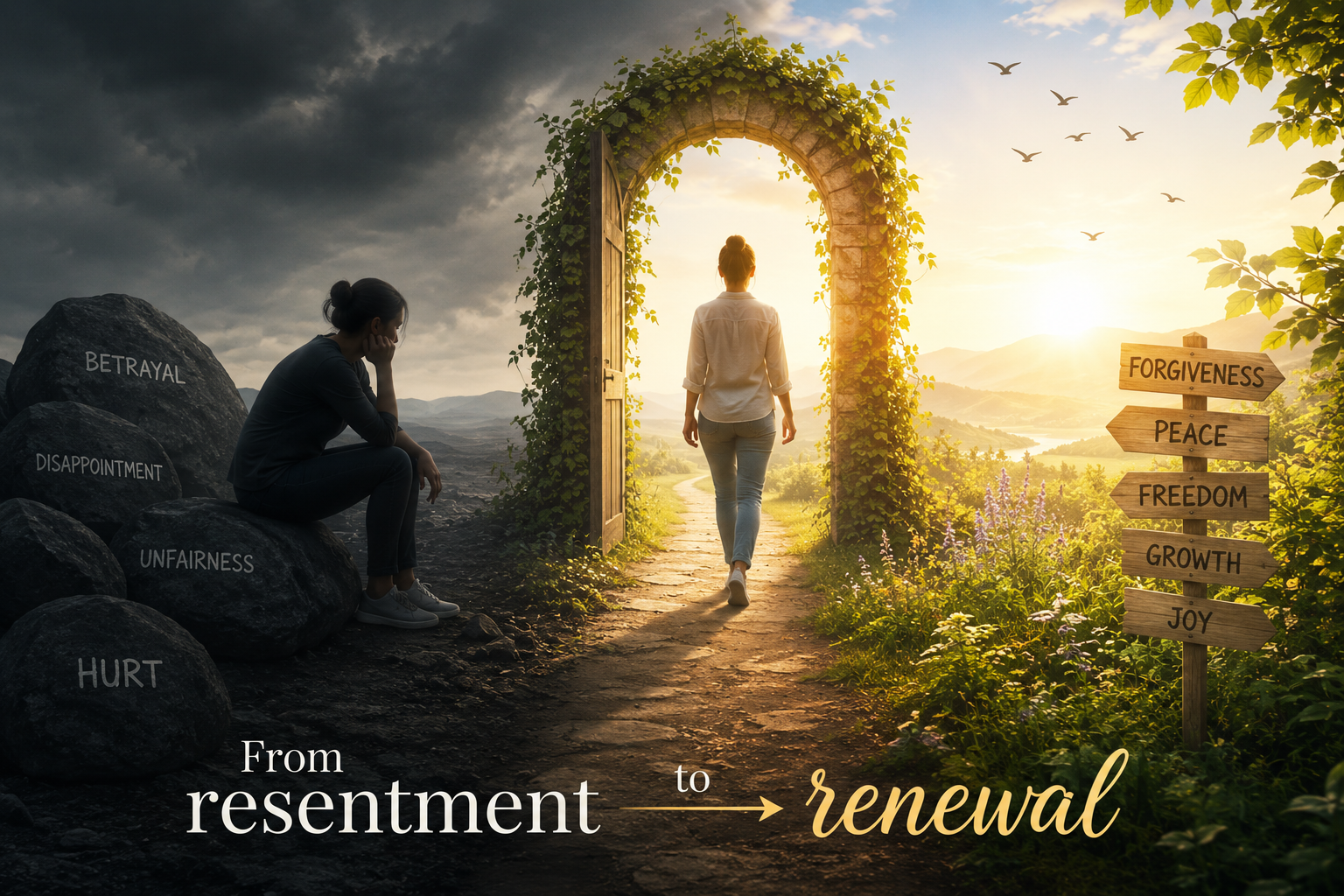
Resentment is a quiet weight. It does not always announce itself loudly, yet it lingers—settling into thoughts, shaping perceptions, and quietly draining emotional energy.
It often begins as a natural response to hurt, betrayal, injustice, or disappointment. Left unresolved, however, it can harden into a barrier that keeps individuals tethered to the very pain they wish to escape.
Yet, within the journey from resentment to renewal lies one of the most powerful transformations a person can experience. It is a journey not of forgetting, but of reclaiming control—of choosing growth over bitterness and freedom over emotional captivity.
The Anatomy of Resentment
Resentment is rooted in unresolved emotional injury. It arises when expectations are violated or when one feels wronged without closure or justice. Psychologically, it is sustained by rumination—the repeated revisiting of past events, often accompanied by a sense of helplessness or indignation.
Over time, resentment can distort perspective. It narrows focus, making it difficult to see beyond the offense. Relationships suffer, mental well-being declines, and even physical health can be affected. What begins as a reaction to pain becomes a cycle that perpetuates it.
Importantly, resentment often feels justified. And in many cases, it is.
The harm experienced may be real and significant. But justification does not equate to benefit. Holding onto resentment may validate the pain, but it rarely heals it.
The Turning Point: Awareness and Choice
Transformation begins with awareness—the recognition that resentment, while understandable, is no longer serving a constructive purpose. This realization is not about dismissing the past; it is about acknowledging its ongoing impact.
The shift from resentment to renewal is ultimately a choice. It is the decision to stop allowing past wounds to dictate present reality. As Viktor Frankl famously asserted, even in the most difficult circumstances, individuals retain the freedom to choose their response. This freedom becomes the foundation for renewal.
Forgiveness: A Misunderstood Liberation
At the heart of this transformation lies forgiveness—perhaps one of the most misunderstood concepts in personal growth. Forgiveness is often mistaken for condoning wrongdoing or reconciling with those who caused harm. In reality, it is neither.
Forgiveness is an internal process. It is the conscious release of the hold that resentment has on one’s emotions and thoughts. It does not erase the past, but it redefines one’s relationship with it.
Research by Robert Enright, a pioneer in the scientific study of forgiveness, shows that individuals who practice forgiveness experience lower levels of anxiety, depression, and stress. Letting go is not an act of weakness—it is a strategic step toward emotional well-being.
Reframing the Narrative
Renewal requires a shift in perspective. Instead of viewing oneself solely as a victim of circumstances, one begins to see the broader narrative—one that includes resilience, survival, and the capacity to grow.
This does not mean minimizing pain. Rather, it involves integrating the experience into a larger story of strength. Questions such as “What has this taught me?” or “How has this shaped who I am?” can open pathways to meaning.
In this process, individuals often discover that adversity has refined their character, clarified their values, and strengthened their resolve.
The Role of Compassion
Compassion—both for oneself and others—is a critical element in moving toward renewal. Self-compassion allows individuals to acknowledge their pain without judgment. It replaces harsh self-criticism with understanding and patience.
Extending compassion to others, including those who caused harm, can be more challenging. It does not require excusing behavior, but it involves recognizing the complexity of human actions. People act in their own limitations, fears, and experiences. This understanding can soften the grip of resentment.
Renewal: Reclaiming Life
Renewal is not a single moment, but a process. It is reflected in small, intentional steps—choosing peace over anger, presence over rumination, and possibility over stagnation.
As individuals release resentment, they often experience a renewed sense of clarity and energy. Emotional space is created for new relationships, opportunities, and experiences. Life begins to feel less constrained by the past and more open to the future.
This transformation can also inspire others. Those who move through pain with grace often become sources of strength and guidance within their communities.
Practical Steps Toward Renewal
While the journey is deeply personal, several practices can support the transition:
Acknowledge the hurt: Healing begins with honest recognition of pain.
Set boundaries: Letting go of resentment does not mean allowing continued harm.
Practice reflection: Journaling or meditation can help process emotions constructively.
Seek support: Counseling, mentorship, or community can provide valuable perspective.
Commit to growth: Focus on building a future that is not defined by past wounds.
These steps do not eliminate difficulty, but they provide direction.
Conclusion
The journey from resentment to renewal is not easy. It requires courage, introspection, and a willingness to confront uncomfortable truths. But it is also deeply empowering.
Resentment binds individuals to the past; renewal frees them to move forward. It is the transition from being shaped by pain to being strengthened by it.
In choosing to let go, individuals do not lose their story—they reclaim it. And in that reclamation lies the essence of renewal: the ability to begin again, not as a victim of what has happened, but as an author of what comes next.
The writer is Associate Editor at The New Republic. He enjoys writing on compelling topics in religion and spirituality and draws inspiration from his faith and life’s experiences.