

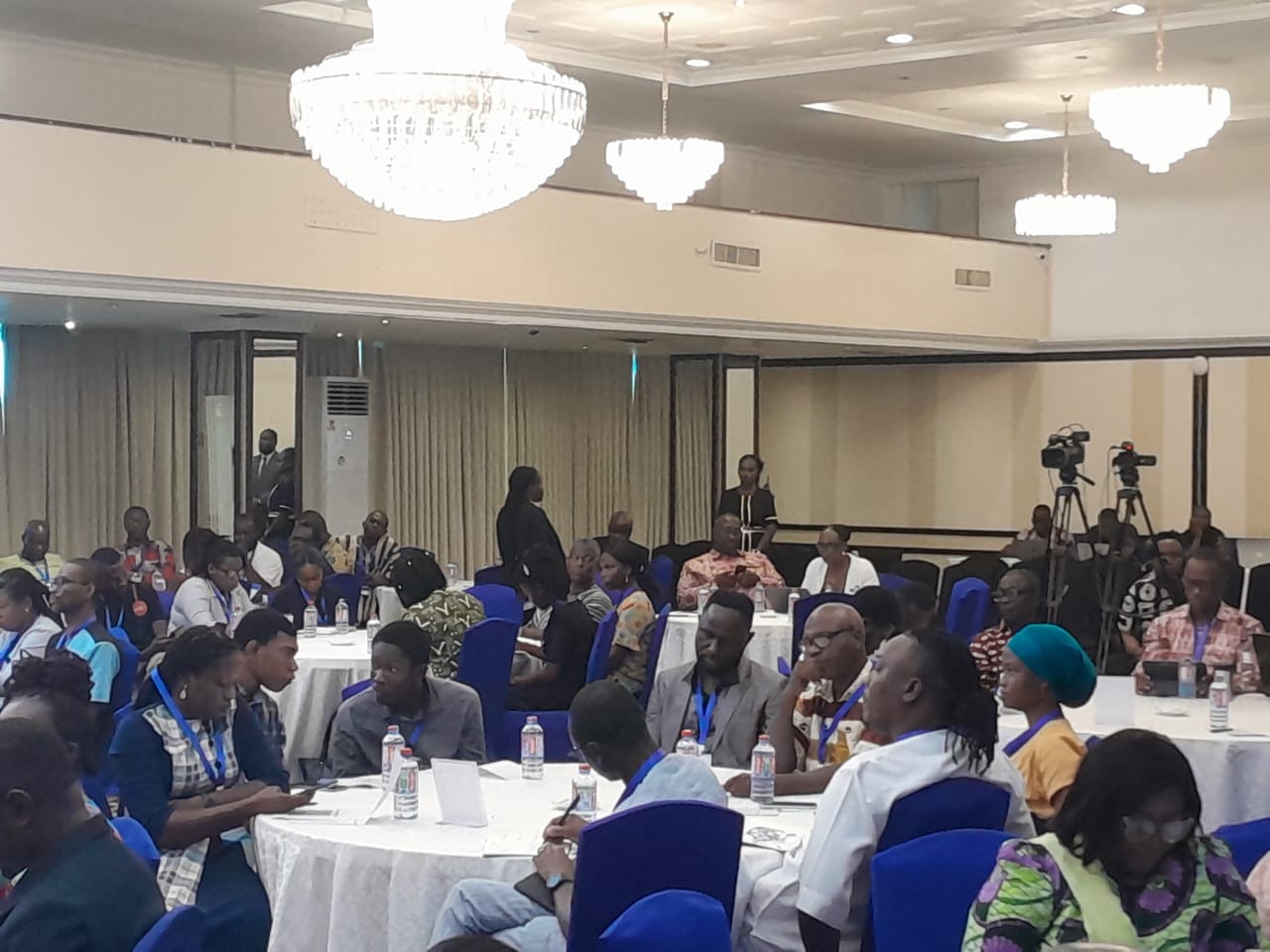
A one day conference to discuss the future of journalism in Ghana, at a time powerful technologies such as Artificial Intelligence (AI) appears to be taking the centre stage, has been held in Accra.
Dubbed ‘The Media Convergence Conference, the event was held under the auspices of the Africa Media Bureau (AMB) and brought together, participants from media organizations, practitioners, experts, technology leaders, policymakers, students, among others.
Held at the La Palm Beach Hotel, the high-level conference was themed “The future of media practice, education and policy in Ghana”.
In a brief address, Chief Executive Officer (CEO) of Africa Media Bureau, Samuel Atta Mensah, gave a frightening statistics of television and radio stations in Ghana, saying while the world is shifting to certain direction, the country continue to deal with proliferation of media stations stressing the importance not to lag behind.
He revealed that, figures from the National Communications Authority (NCA), say that, Ghana with a population of about 35 million, has a total of 805 frequencies for radio only. Out of that figure, 583 are commercial stations while 161 are supposedly community-referenced stations.
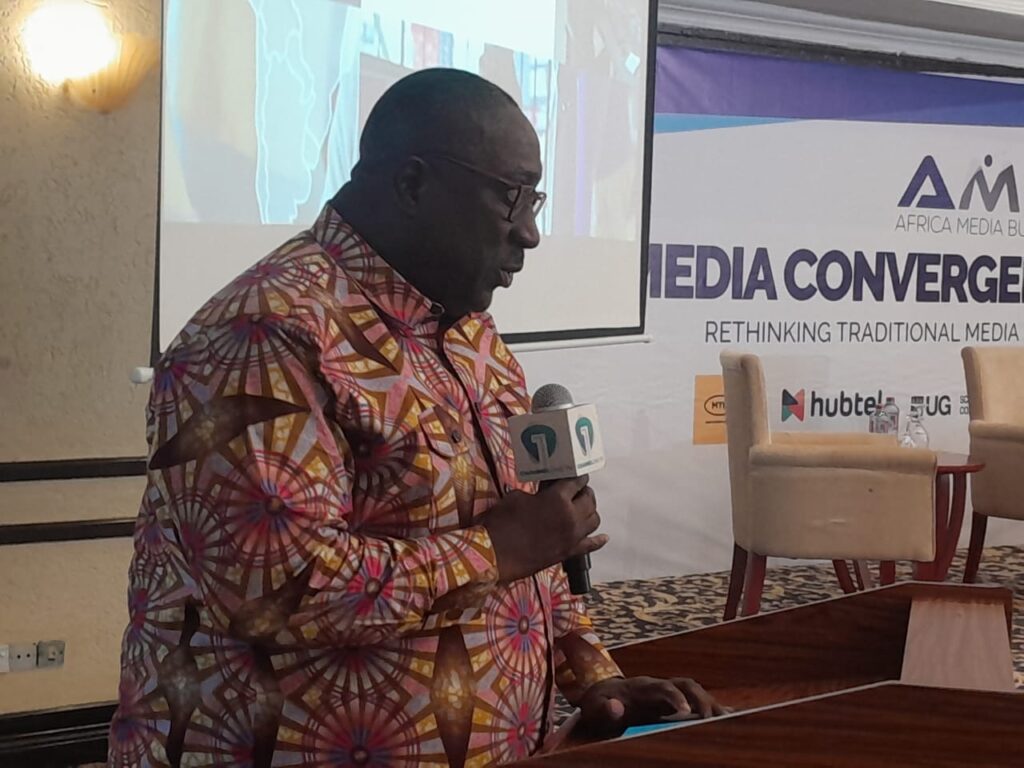
“We have 31 public stations, 25 campus-referenced stations. And then for television, we have 178 TV operators, with 132 currently operating. Now this is just a picture of what we are dealing with in this small country of ours”, Atta Mensah said.
According to the media guru, Ghana cannot afford to pretend not to know where attention is shifting to. He noted that this is why a conference such as this to discuss how best to navigate to join the rest of the world was most needed.
He submitted that unlike in the past, journalism has drastically changed and cannot be practiced away from what is happening currently. “In today’s world, technology has changed how stories are told and how media businesses survive and thrive”, he stressed.
The conference, he emphasized, was not about looking at the change that has happened but how to shift to the future which no one can avoid. He posed critical and thought provoking questions such as “Are we preparing for the next generation of media professionals to embrace the realities of tomorrow? Are our news rules adapted fast enough? And how do we ensure that ethics, credibility, and public trust remain at the centre of innovation?”
Samens, as he is affectionately known said it is the position of AMB that the future of media depends on collaboration between lecturers, the editors, the students, and the professionals, between policy and practise.
“We are honoured to host some of the brightest minds and most experienced voices in the industry today, and we trust that the conversations here will lead to practical recommendations, stronger partnerships, and lasting impact. Thank you for being part of this important dialogue. Welcome, and I wish you a productive and inspiring conference”, he added.
Presenting the keynote address, George Twumasi, the CEO of ABN Holdings/co-founder of Africa Public Interest Media Initiative, touched on a very sensitive part of the discussion. According to him, the traditional media as has been known for decades was dead.
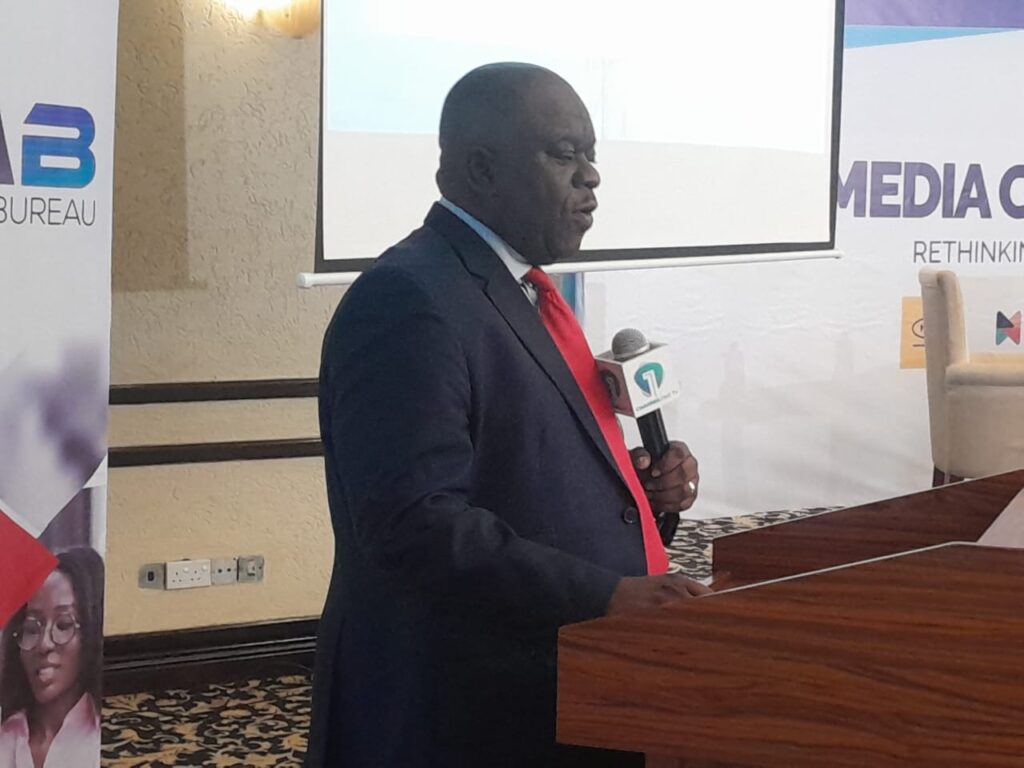
Twumasi argued, most youth in Africa, who are the future, within the ages of 18 to 34 listen to traditional media less than 12 minutes and use the rest of their time on the internet, especially social media consuming creating, and distributing user-generated content for more than six hours.
Unfortunately, he said, these youth stay on these platforms like Facebook, Tiktok, IG and others, a place Africa did not create or has no control over, and monetized by a part of the world that does not answer to the continent’s regulators.
“And increasingly moderated by algorithms that do not recognise our language, our faces, nor recognise our historical perspectives”.
He highlighted “The problem that we all face, when we are my age, is that what we describe as traditional media does not exist. It is dead.
It’s gone. But we like to hold on to that esoteric political position because we grew up with traditional media. We teach about traditional media.
We converge around the thoughts of traditional media. Something that has long departed from our ecosystem. So the phrase traditional media is itself a diagnosis”.
He said “It tells us how we have come to see ourselves as the older generation of an industry. As that industry continues to be disrupted by those younger than we are. It’s a gentle phrase that allows us to speak about the false shape in our industry in a manner that gives us a false sense of security. There is no traditional media for most Africans below the age of 30. It doesn’t exist. We don’t know what that means”.
But a senior lecturer at the University Of Ghana Department Of Communication Studies, Prof Audrey Gadzekpo, disagreed with the assertion that the good old traditional media was dead in Ghana and Africa.
She said survey by the Afrobarometer does not support this assertion indicating that, findings have revealed that a good percentage of the continent’s population still depend on traditional media (radio, television and print) for credible source of news. She said the platforms are so powerful and critical that she does not think practitioners will allow sit unconcerned for it to fade out.
The academic speaking confidently said “I don’t think traditional media will allow itself to die”, saying what needs to be done is for that part of journalism to adapt and be on top of their craft.
“…because we are looking at how to adapt and win the game. We know that this needs to happen. There are realities to deal with. I want to confront those realities. They said earlier that you have to die, because it’s half-assured, and this is what is necessary. So if it’s only a one-way to die, it’s adapting, and it is going to be here”.
A digital marketing expert, Maximus Ametorgoh, cautioned that the practice of journalism going forward will be changed with the emergence of AI. He alerted that journalists who fail to adapt to the phenomenon may likely become not useful to the profession.
In his view, traditional media is on “AI life support,” urging urgent transformation within the industry. He gave vivid instance where daily lives are now interrupted without anyone asking.
He added “Traditional media is on an AI life support at the moment, and we need to adapt. Technology does not need your permission to impact your way of life or even take away your job.
AI will not take the job of a journalist, but it will take the job of the journalist who does not know how to use AI.
We are going to get to the level where we will not be needed. We are already seeing hints of it”.
Speaker after speaker continued to give their own perceptive about the issue but one point was clear in the many submissions as they agreed that a lot can be achieved if traditional media adjusts and adapts, while sticking to the ethical way of doing things, as that is what will differentiate them from those on new media.
There were panel discussions on from Radio and Print to Multimedia newsroom: Ghana’s convergence journey, metrics, monitasation and sustainability in converged media market and media education in a converged world.
Other speakers were Professor Abena Animwaa Yeboah-Banin of the University of Ghana, Etse Sikanku of UniMac, Kofi Owusu of the Ghana News Agency (GNA) among others.
At the end of the conference, organozers will be expected to produce a communiqué outlining key recommendations on media convergence and education in Ghana. These will include proposals for policy reform, curriculum updates and ethical frameworks suited to the digital age.
The anticipated outcomes also include a shared understanding of Ghana’s media convergence reality and the establishment of stronger institutional partnerships to drive innovation.
By Gifty Boateng