

By Lawrence Odoom/Phalonzy
President John Dramani Mahama has framed the recent conflagration at the Akosombo power enclave not as a calamity, but as a strategic inflection point, describing it as “an opportunity to upgrade critical infrastructure” following disruptions that plunged swathes of the country into intermittent blackouts.
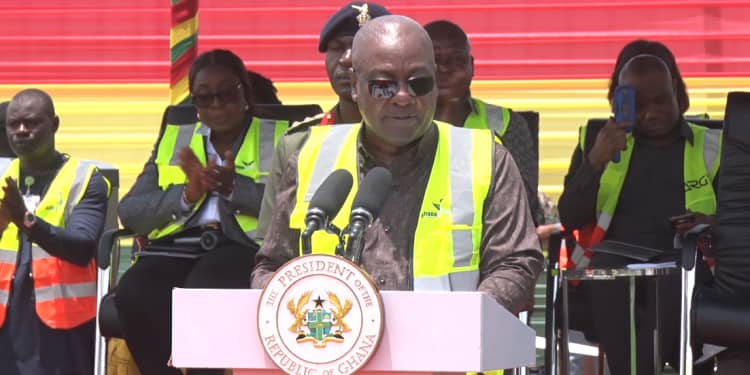
The President made the assertion on Thursday, April 30, during a tour of the Akosombo Dam to evaluate the aftermath of the incident, which ravaged a substation under the aegis of the Ghana Grid Company.
The inferno crippled vital equipment, excising “more than 1,000 megawatts of power” from the national grid and precipitating erratic electricity supply across multiple regions.
Addressing engineers and senior officials on site, President Mahama insisted that the setback must be transmuted into systemic advancement.
“This presents an opportunity because now that this adversity has happened, it gives us an opportunity to replace it with a more modern control room that will serve this Akosombo Plant and let it work for more generations yet to come,” he said.
He lauded the technical corps for their dexterous and expeditious response in restoring generation capacity, acknowledging substantial progress in stabilizing the grid.
“You have four of the turbines back on, and he says that you’re working another miracle and that I’ll get good news soon with the remaining two turbines also coming back on,” he added.
Mahama reiterated government’s unwavering commitment to fortify key state energy institutions, describing both GRIDCo and the Volta River Authority as “critical to Ghana’s power sector.”
“VRA will continue to be one of the foremost state-owned enterprises, and every support the government can give you, we will continue to give you,” he said.
Meanwhile, Minister for Energy, John Jinapor, confirmed that four generation units at the dam “have been successfully restored,” with the remaining units “expected to return to operation within the week.”
The restoration efforts signal a concerted drive to not only recover lost capacity but to reengineer the Akosombo enclave with resilient, next-generation systems capable of underpinning Ghana’s energy security for decades.