

By Gideon Amuah | Email – gideon.amuah@gmail.com
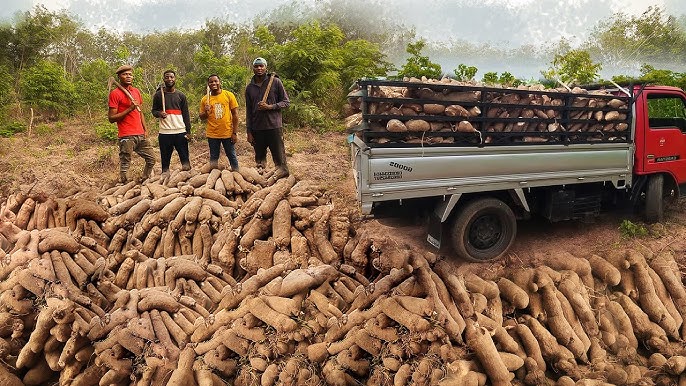
Every harvest season in Ghana, the same drama unfolds. Farmers in villages load their maize, tomatoes, cassava, or yams onto trucks—only to find themselves at the mercy of aggregators and market women who dictate the price. With no bargaining power and no access to alternative buyers, most farmers have little choice but to accept whatever is offered. The result? Farmers stay poor, consumers pay more, and the nation’s food system remains fragile.
These middle players—aggregators who buy in bulk and market women who control access to stalls and markets—play a vital role in moving food from farms to tables. But the concentration of power in their hands often creates distortion. Farmers, especially smallholders, receive as little as 20–30 percent of the final retail price of their produce. Meanwhile, by the time food reaches Accra, Kumasi, or Takoradi, consumers are paying two to three times what the farmer was paid. This spread is not merely the cost of transport and logistics; it’s the cost of monopoly power.
The impact on food security is severe. When farmers are consistently underpaid, they cannot reinvest in seeds, fertilizer, or irrigation. Many lose motivation to expand production, reducing overall food supply. At the same time, inflated market prices make nutritious food less affordable for urban families, pushing many toward cheaper, less healthy alternatives. This cycle locks Ghana into both low productivity and rising food insecurity.
The practice is particularly damaging for perishable crops like tomatoes, mangoes, and leafy vegetables. With limited storage, farmers are forced to sell quickly, giving aggregators enormous leverage. In some markets, so-called “market queens” even control who is allowed to sell and at what price, effectively shutting farmers out of direct access to consumers. It is a system that sustains intermediaries but suffocates innovation and fairness.
But change is possible. Digital platforms are emerging that connect farmers directly with buyers, breaking the monopoly of middle players. Mobile-based apps allow smallholders to compare prices across markets before selling. Cooperatives can pool produce, hire transport, and negotiate collectively, giving farmers more strength against aggregators. Investments in storage and processing also reduce the desperation to sell immediately after harvest, helping farmers hold out for fairer prices.
Here, the Ministry of Agriculture can play a catalytic role. Beyond promoting cooperatives, the ministry can aggressively pursue public–private partnerships to invest in digital platforms that link farmers directly to markets. With the right support, apps could allow farmers to list their produce, consumers to order directly, and traders to source transparently—cutting out exploitative practices. Promoting these platforms among farmers, market operators, and consumers would build trust and adoption, ensuring technology becomes a tool for fairness rather than disruption. When farmers know what their crops are worth in different markets, they gain bargaining power. When consumers can see transparent pricing, they pay less. And when the ministry ensures these platforms are inclusive and widely used, Ghana takes a step toward rebalancing the food system.
The current Minister of Agriculture has already spoken about community and product-specific cooperatives as a way to address resource sharing and close the knowledge gap. Combining this cooperative model with digital innovations can be a game-changer. Farmers would no longer stand alone at the mercy of middle players; instead, they would be linked, informed, and empowered to claim their fair share of value.
Ultimately, food security in Ghana will not be achieved by growing more alone. It will also depend on creating fairer markets where farmers are rewarded for their labor and consumers can access affordable food. The power imbalance between farmers and middle players must be corrected if Ghana is to build a food system that is both just and resilient.