

By Gifty Boateng
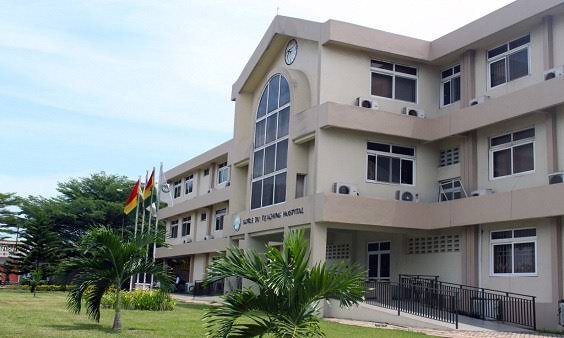
The preventable death of a 46-year-old woman at Korle-Bu Teaching Hospital on Sunday has reignited criticism of successive governments’ failure to resolve the teaching hospital’s chronic bed shortage, a crisis that has now claimed multiple lives in recent months.
Laila, sister of popular musician Mzbel (Belinda Nana Akua Amoah), was rushed to the premier health facility in critical condition but was turned away because no bed was available. She died hours later, reportedly on the hospital floor.
The tragedy follows the February death of 29-year-old engineer Charles Amissah, whose demise after being denied care at three Accra hospitals, including Korle-Bu, prompted a government-appointed investigation. That committee, chaired by Professor Agyemang Badu Akosa, concluded in May that Amissah’s death was “avoidable” and resulted from “medical neglect” rather than his accident injuries.
In an emotional statement, Mzbel directed blame squarely at the political class, arguing that the crisis is a failure of governance rather than clinical practice.
“We cannot blame the nurses and doctors. We should blame government,” she said. “Since I was a child I kept hearing there is no bed at Korle-Bu. Successive governments have they not heard this?”
Her remarks underscore a growing public frustration with the health sector’s infrastructure deficits, despite repeated government pledges. In May, Deputy Health Minister Prof. Dr Grace Ayensu-Danquah, a trained trauma surgeon, assured Parliament that “the no bed syndrome will be a thing of the past,” promising upgrades to healthcare facilities nationwide.
The Ministry of Health has yet to respond to Laila’s death.
The investigative committee’s findings on Amissah’s case were damning. Seven medical professionals across three hospitals were cited for negligence, with the report concluding that Amissah bled to death from “exsanguination” – excessive blood loss – due to injuries that could have been managed with basic interventions such as wound compression during transport.
“If at any of these facilities, there had been medical intervention, Charles Amissah could have survived,” the report established.
The doctors implicated include personnel from Police Hospital, Ridge Hospital, and Korle-Bu. The committee recommended disciplinary action against all seven, describing one doctor’s testimony as “untruthful.”
Dr Matilda Amissah, sister of the deceased engineer, has initiated legal proceedings against the three hospitals, named health professionals, and the Attorney General, seeking GH¢20 million in damages. The case, filed at the High Court in Accra, alleges a series of negligent acts led to her brother’s death after a hit-and-run accident on the Kwame Nkrumah Circle Overpass.
The writ names the Ghana Police Hospital, Greater Accra Regional Hospital, Korle-Bu Teaching Hospital, and seven individual health professionals. The defendants have eight days to respond.
Mzbel questioned why beds are only provided during election periods, suggesting political expediency rather than genuine commitment drives health policy.
“Politicians appear not to care about the welfare of the people who vote for them,” she said. “They only care when they need them to vote for them.”
The singer revealed she had spoken with her sister on Saturday, anticipating her return home, only to be confronted with news of her death the following day. She described patients lying on bare floors for days while staff, overwhelmed and frustrated, are unable to provide adequate care.
“You are doing well but if it was election period you would have provided these beds,” she said. “So President, we voted for you there is no bed in Korle-Bu. Provide them.”
The Ministry of Health’s assurances in May have so far yielded no observable results, raising questions about government’s capacity to address a problem that has persisted for decades.
Amissah’s death prompted a comprehensive investigation; Laila’s death suggests the findings have yet to translate into actionable reforms.
With the legal case pending and public anger mounting, the government faces increasing pressure to demonstrate tangible progress before further lives are lost to what health professionals have described as a “never event” a tragedy that should never occur in a functioning health system.