

As GMet clarifies its technical role, questions mount over NPP’s stewardship of $200m flood prevention project
By Phillip Antoh
The devastating floods that claimed at least 34 lives in Accra on 29 June have reignited scrutiny of the Greater Accra Resilient and Integrated Development (GARID) project – and with it, the competency of the previous New Patriotic Party administration in managing a $200 million World Bank-funded initiative intended to prevent precisely this catastrophe.
As the Ghana Meteorological Agency (GMet) moves to distance itself from the project’s financial management, insisting its role is “purely technical,” the broader question remains: how did eight years of NPP stewardship leave Accra’s drainage infrastructure no better equipped to handle seasonal rains and where did the money go?
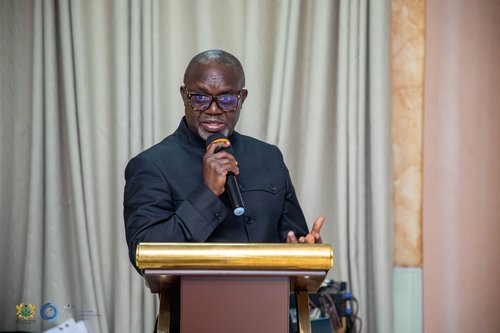
GMet Director-General Dr Eric Asuman sought to clarify his agency’s limited role in the project, telling Asempa FM’s Ekosii Sen programme: “Our role is purely technical. GMet doesn’t have any account, doesn’t receive any money under GARID. We are just partners telling them what we want.”
Under the Accra Flood Early Warning System (FEWS), GARID procured rainfall measurement equipment for GMet and developed software to integrate meteorological data with the Ghana Hydrological Authority. The division of labour is clear: GMet forecasts rain, the Hydrological Authority models potential floods, and NADMO coordinates disaster response.
Yet despite this seemingly robust design, Dr Asuman admitted the project has faced “implementation delays, largely due to slow funding releases and bureaucratic bottlenecks.”
The Ministry of Works and Housing, he said, delayed approval of designs for infrastructure needed to mount rainfall readers – a delay so frustrating that GMet offered to construct the infrastructure itself, only for the floods to strike before execution could begin.
The NPP’s record on flood prevention is now under intense scrutiny. By its own admission, the previous administration spent over GH¢550 million on emergency flood relief and drainage during its eight-year tenure. Added to this was the GARID project, a US$200 million World Bank-backed initiative specifically designed to fix drainage and waste management along the Odaw River Basin.
Yet year after year, communities including Kaneshie, Achimota, Weija, and Spintex remained vulnerable. The question is not whether money was allocated it clearly was but whether it was applied effectively.
Critics, including policy think tank IMANI Ghana, have pointed out that only a fraction of released GARID funds went directly to physical flood-control engineering works, with the bulk distributed among consultancies, COVID-19 relief, and capacity building.
The NPP’s recent demands for accountability from the Mahama administration, barely a year in office, have drawn sharp rebuke. NDC’s Afaglo has fired back, describing the party’s posture as audacious and amnesiac.
“Let us be clear: Accra flooding is a historic, systemic problem. It happened under the NPP, and it has happened under the NDC. No government gets a free pass,” Afaglo stated.
“However, there is a glaring difference between an administration finding its footing after a few months, and a party that held the presidency for eight full years armed with resources, a clear mandate, and repeated promises to fix this exact crisis yet left office with drains still choked and communities still submerged.”
The critique cuts to the heart of the matter: if GH¢550 million and US$200 million in World Bank funds were spent as claimed, Ghanaians deserve to see the receipts. Which drains were desilted? Which contractors were paid? Which projects were completed, and which were abandoned after the press conferences?
Afaglo has added his voice to calls for a fully independent audit of all flood and sanitation expenditure under the previous administration – encompassing GARID funds, the GH¢550 million, and all associated contracts.
“I directly appeal to President John Dramani Mahama to order an independent audit,” he said. “Empower the Auditor-General or a credible independent body to trace every cedi and dollar and publish the findings without fear or favour. If the NPP spent the money well and simply left unfinished projects, the audit will vindicate them. If not, the law must take its course.”
The GARID project delays, combined with the opaque allocation of funds, point to a pattern of administrative incompetence that left Accra dangerously unprepared for the June floods.
The Ministry of Works and Housing’s slow approval of designs, the diversion of funds to non-infrastructure activities, and the lack of transparent reporting all contributed to a system that failed when it was most needed.
The irony is stark: the NPP, which presided over these failures, now demands accountability from a government still finding its footing. Until the books are opened and the full story of GARID’s implementation is told, the party’s demands ring hollow.
Ghanaians are tired of press statements and political point-scoring. They want to know why hundreds of millions of cedis were spent with no tangible results. The truth, not recycled blame, is what the nation deserves.