

as Styrofoam Ban Draws Near
By Gifty Boateng
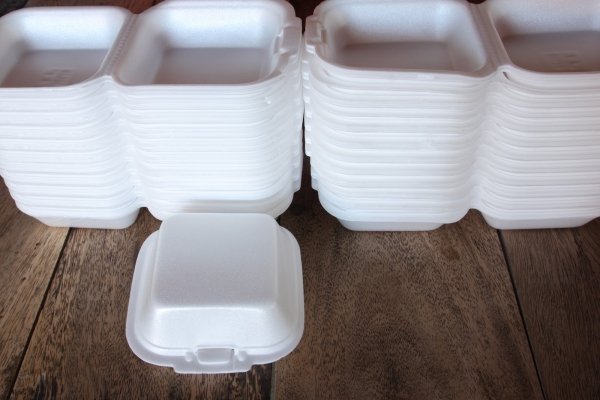
Ghana’s Environmental Protection Authority (EPA) is pressing ahead with its planned nationwide ban on polystyrene products from 1 January 2027, despite mounting pressure from manufacturers to extend the deadline and growing concerns over potential job losses and investment write-downs.
The EPA, in a letter dated 10 June 2026, has requested detailed data from industry stakeholders to conduct a comprehensive inventory and stock assessment of polystyrene products currently in the country. The exercise is intended to support transition planning and strengthen enforcement preparedness ahead of the ban’s implementation.
The move follows a stakeholder meeting held on 3-4 June, where parties agreed to assess quantities, supply chains, and flows of polystyrene products and raw materials. The EPA has requested data on finished products, raw materials, supply chain information, importation, distribution, and market flows in quantitative and verifiable formats.
The Ghana Plastic Manufacturers Association (GPMA) has intensified its opposition to the timeline, warning that the ban would have severe economic consequences. In a letter to President John Dramani Mahama, GPMA President Ebbo Botwe requested an extension to 1 January 2030.
“We respectively request H.E. President John Dramani Mahama to intervene in this matter for time extension,” Botwe said. “We propose effective date of 1st January 2030 to give us enough time to stop manufacture of Styrofoam food packaging products.”
The industry’s exposure is significant. According to GPMA, capital investment in plant and machinery for Styrofoam food packaging amounts to GHs 1.493 billion. The sector comprises 171 production factories across the country, directly employing 41,395 people and supporting an estimated 1.89 million jobs in the plastic waste recycling sector.
Beyond direct employment, the industry claims to generate approximately 1.43 million jobs in the sachet, bottled water, beverage, and auxiliary sectors, bringing total employment exposure to about 3.71 million people.
The manufacturers also point to the broader regional implications. About 57% of exports currently go to ECOWAS nations including Togo, Sierra Leone, Mali, Niger, Nigeria, Benin, Ivory Coast, Liberia, and Senegal. Many of these countries have not enforced similar bans, potentially creating competitive disadvantages for Ghanaian manufacturers.
Free Zone companies, which are required to export up to 75% of their products, would be particularly affected.
Industry representatives have also raised concerns about the impact on their banking relationships. GPMA noted that investments in plants and machinery are tied to bank loans, and lenders are already in “panic mode” following the EPA’s announcement.
“Since EPA’s press release, the banks have taken serious concern as to what will happen to our machinery and how to recover their loans if the machines become scraps,” the association stated.
Manufacturers argue that the return on investment for GPPS/PS machinery typically takes up to 10 years, with some companies having acquired equipment as recently as two years ago. A ban enforced in 2027 would result in substantial losses for these firms.
The association also warned that enforcing the ban could prompt companies to relocate their machinery and operations to more favourable jurisdictions, a move that would require the movement of foreign exchange with potential inflationary consequences.
Critically, the current GPPS/PS machinery cannot be retooled for alternatives, including bioplastics, as it is designed solely for Styrofoam products. Manufacturers further caution that the raw materials used for Styrofoam are also used for other products such as BIC pens, meaning import restrictions could inadvertently disrupt other manufacturing activities.
While GPMA acknowledges that a transition is inevitable, it insists that it “must be done in fairness as far as our cost of investment of existing machinery is reimbursed.”
The association proposes an 18-month transition period, arguing that rapidly implementing the ban “will not be in the interest of government neither in the interest of the investor community.”
The EPA’s ban aligns with President Mahama’s policy direction to protect the environment and address sanitation challenges. The measure forms part of broader national efforts to improve environmental sanitation, safeguard public health, reduce plastic waste, and promote sustainable development.
However, as the ban approaches, the tension between environmental objectives and economic realities is becoming increasingly acute. The data collection exercise now underway will be critical in determining whether the 2027 deadline is feasible or whether a more gradual transition is required.
Ghana’s Plastics Industry Faces Crunch
0Related Posts
Bawku Lowers Its Guns
4 Mins Read
Cyber Losses Hit $484 Million
4 Mins Read
COPEC To Unseat Dollar In Crude Oil Trade
3 Mins Read
Add A Comment
© 2026 THE NEW REPUBLIC GH.
About | Contact | Privacy Policy