

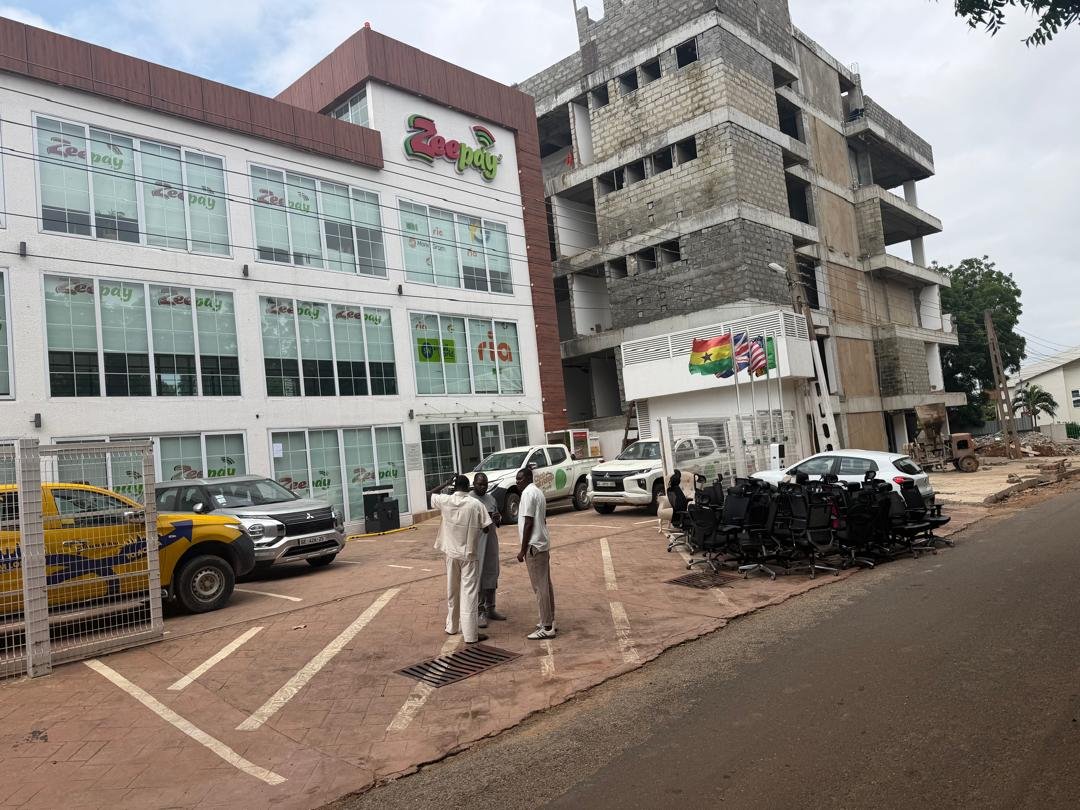
-Over $11.6m Judgment Debt Blows Open Fintech Scandal
By Stanley Asor
The High Court has seized the residence of Zeepay founder and CEO Andrew Takyi-Appiah, marking a dramatic escalation in the enforcement of a US$11.6 million judgment debt arising from the misappropriation of client funds.
Armed police officers stormed the 11 Kofi Annan Street residence opposite Kwarleyz Hotel in Airport Accra on the morning of Monday 6 July to enforce the seizure, with video footage circulating on social media capturing the property under police besiegement.
According to information, luxury cars belonging to Takyi-Appiah have also been attached to the property for seizure.
The action follows a 16 April 2026 judgment by the Accra High Court (Commercial Division), in which Justice Afi Agbanu Kudomor ordered Takyi-Appiah and Zeepay to repay more than GH¢180 million to Judgement debtor Yusuf.
The total comprises over US$11.5 million, €8,500 and GH¢1.4 million, along with accrued interest and legal costs of GH¢500,000.
Court documents reveal that Yusuf had forwarded substantial sums to Zeepay for onward transfer to designated recipients. After receiving the monies, however, Zeepay failed to execute the transfers, dilly-dallied, and eventually offered to refund the funds. Takyi-Appiah and Zeepay ultimately refunded only US$340,000 out of the US11.9 million Yusuf had forwarded.
Court papers further revealed that Takyi-Appiah had received monies from Yusuf via his personal mobile money account a practice that raised fundamental questions about the separation of corporate and personal finances.
When Yusuf brought the matter to court, Takyi-Appiah sought to impugn the character of the plaintiff, claiming the source of Yusuf’s money was fraudulent. Justice Kudomor dismissed these claims, describing them as a “sham,” and ordered repayment of the monies received together with interest.
The seizure of Takyi-Appiah’s personal residence is only one front in a widening crisis engulfing the once-celebrated fintech company. Zeepay’s main office at Cantonments, opposite Ghana International School, is reportedly also under seizure.
The company’s international operations have similarly collapsed. Zeepay’s Barbados branch has been liquidated following regulatory action by the Central Bank of Barbados, which suspended its licence citing “materially deepened concerns” about financial stability, governance, and compliance. The UK office is facing at least three arbitration actions.
The crisis was presaged by the 12 February 2026 resignation of Zeepay’s Chief Financial Officer, Nana Ntim Asamoah. His resignation letter cited “material weaknesses and abuse within the Company’s treasury operations” and raised concerns about “shady audit practices” by the Board of Directors.
The letter, reportedly copied to the Economic and Organised Crime Office (EOCO) and the Bank of Ghana, referenced difficulties in completing audits due to “serious concerns over the quality and reliability of information provided.”
Amidst the crisis, the Bank of Ghana is said to have suspended the company’s Managing Director. The central bank’s Fintech Division has not issued a detailed public statement, though regulatory sources suggest authorities have been monitoring developments closely.
Zeepay was once regarded as a flagship success story in Ghana’s fintech sector, processing billions of dollars in remittances annually and partnering with major global payment platforms including MoneyGram and Remitly. Its rapid rise is now being overshadowed by allegations of financial mismanagement, governance lapses, and mounting legal liabilities.
The seizure of Takyi-Appiah’s residence signals that creditors are prepared to pursue every available asset to recover what they are owed. With multiple lawsuits underway and regulatory actions continuing, the full extent of Zeepay’s collapse may not yet be known.